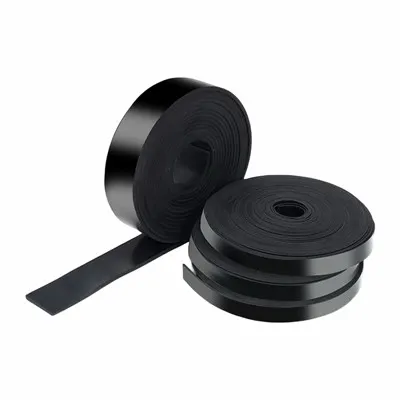
Gas permeability is a critical property when it comes to rubber gaskets, and as a supplier in this industry, I’ve witnessed firsthand how understanding this concept is essential for both manufacturers and end – users. Rubber Gasket
Understanding Gas Permeability
Gas permeability refers to the ability of a material to allow gases to pass through it. In the case of rubber gaskets, it is the rate at which gases can diffuse through the rubber matrix. This property is influenced by several factors, including the type of rubber, its chemical composition, temperature, and the partial pressure difference of the gas across the gasket.
The mechanism of gas permeation through rubber involves three main steps: adsorption, diffusion, and desorption. First, gas molecules are adsorbed onto the surface of the rubber. Then, these molecules diffuse through the rubber matrix, moving from an area of high concentration to an area of low concentration. Finally, the gas molecules desorb from the opposite surface of the rubber.
Factors Affecting Gas Permeability of Rubber Gaskets
Type of Rubber
Different types of rubber have different gas permeability characteristics. For example, natural rubber (NR) has relatively high gas permeability. This is because its molecular structure is more flexible and has larger free volume, allowing gas molecules to pass through more easily. On the other hand, butyl rubber (IIR) is known for its low gas permeability. Butyl rubber has a highly saturated and non – polar structure, which restricts the movement of gas molecules through the rubber matrix.
Chemical Composition
The chemical additives in rubber can also affect gas permeability. For instance, fillers such as carbon black can reduce gas permeability by increasing the tortuosity of the diffusion path for gas molecules. Plasticizers, on the other hand, can increase the free volume of the rubber, potentially leading to higher gas permeability.
Temperature
Temperature has a significant impact on gas permeability. As the temperature increases, the kinetic energy of gas molecules also increases. This causes the gas molecules to move more rapidly, and the rubber matrix becomes more flexible, allowing for easier diffusion of gas molecules. Generally, gas permeability increases exponentially with temperature. The Arrhenius equation can be used to describe the relationship between gas permeability and temperature:
[P = P_0\exp\left(-\frac{E_p}{RT}\right)]
where (P) is the gas permeability at temperature (T), (P_0) is a pre – exponential factor, (E_p) is the activation energy for permeation, (R) is the universal gas constant, and (T) is the absolute temperature.
Partial Pressure Difference
The partial pressure difference of the gas across the rubber gasket is the driving force for gas permeation. A larger partial pressure difference will result in a higher rate of gas permeation. According to Fick’s first law of diffusion, the flux ((J)) of gas through a rubber gasket is proportional to the concentration gradient (or partial pressure gradient) of the gas:
[J=-D\frac{dC}{dx}]
where (D) is the diffusion coefficient of the gas in the rubber, (C) is the concentration of the gas, and (x) is the distance.
Measuring Gas Permeability of Rubber Gaskets
There are several methods available for measuring the gas permeability of rubber gaskets. One of the most common methods is the pressure – change method. In this method, a rubber gasket is placed between two chambers. One chamber is filled with a gas at a known pressure, and the other chamber is initially evacuated. The change in pressure in the evacuated chamber is measured over time, and the gas permeability can be calculated based on the rate of pressure increase.
Another method is the mass – change method. In this method, a rubber sample is exposed to a gas, and the change in mass of the sample is measured over time. The gas permeability can be determined from the rate of mass change.
Importance of Gas Permeability in Rubber Gasket Applications
The gas permeability of rubber gaskets is crucial in many applications. In the automotive industry, for example, rubber gaskets are used in engines, fuel systems, and air intake systems. Low gas permeability gaskets are required to prevent the leakage of fuel vapors, air, and exhaust gases, which can not only lead to environmental pollution but also affect the performance and efficiency of the vehicle.
In the food and beverage industry, rubber gaskets are used in packaging and processing equipment. Gaskets with low gas permeability are essential to maintain the freshness and quality of the products by preventing the ingress of oxygen and the escape of carbon dioxide.
In the pharmaceutical industry, rubber gaskets are used in drug containers and delivery systems. The gas permeability of these gaskets can affect the stability and shelf – life of the drugs. For example, oxygen can cause oxidation of drugs, leading to a decrease in their efficacy.
Our Offerings as a Rubber Gasket Supplier
As a rubber gasket supplier, we understand the importance of gas permeability in different applications. We offer a wide range of rubber gaskets made from various types of rubber, including natural rubber, butyl rubber, nitrile rubber (NBR), and silicone rubber (VMQ).
We have a state – of – the – art manufacturing process that allows us to control the chemical composition and structure of the rubber, thereby optimizing the gas permeability of our gaskets. Our quality control team conducts rigorous testing on all our products using advanced gas permeability measurement techniques to ensure that they meet the highest standards.
We also provide customized solutions to our customers. If you have specific requirements regarding gas permeability, temperature resistance, or other properties, our experienced R & D team can work with you to develop a rubber gasket that meets your exact needs.
Conclusion
In conclusion, gas permeability is a fundamental property of rubber gaskets that can significantly affect their performance in various applications. As a supplier, we are committed to providing high – quality rubber gaskets with optimized gas permeability. Whether you are in the automotive, food and beverage, pharmaceutical, or any other industry, we have the expertise and resources to meet your rubber gasket needs.
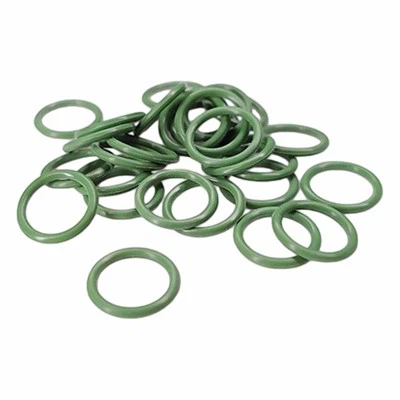
FKM O Ring If you are interested in learning more about our rubber gaskets or would like to discuss a potential procurement, please don’t hesitate to contact us. We look forward to the opportunity to work with you and provide you with the best rubber gasket solutions.
References
- Crank, J. (1975). The Mathematics of Diffusion. Oxford University Press.
- Sperling, L. H. (2006). Introduction to Physical Polymer Science. Wiley – Interscience.
- ASTM D1434 – 82(2015) Standard Test Method for Determining Gas Permeability Characteristics of Plastic Film and Sheeting.
Haining Chaoyue Seals Co., Ltd.
As one of the most professional rubber gasket manufacturers and suppliers in China, we offer a wide range of products with superior quality. Please feel free to wholesale high quality rubber gasket made in China here from our factory. Also, custom service is available.
Address: Building 9, 158 Lianhong Road, Yuanhua Town, Jiaxing, Zhejiang, China.
E-mail: chaoyue@cyseals.com
WebSite: https://www.hncyseal.com/
