Hey there, if you’re in the market for grain conveying equipment—whether you’re a small family farm scaling up operations, a mid-sized grain processing plant looking to upgrade your setup, or a commercial grain terminal moving tons of product daily—one of the first questions you’re probably asking is: how much is this actually gonna cost? As a grain conveying equipment supplier who’s been deep in this game for over a decade, I get it. This isn’t a one-size-fits-all purchase. The price varies so widely depending on what you need, why you need it, and how heavy your daily workload is. Let me break this down like we’re chatting over a coffee, no confusing jargon, just real numbers and context that actually makes sense. Grain Conveying Equipment
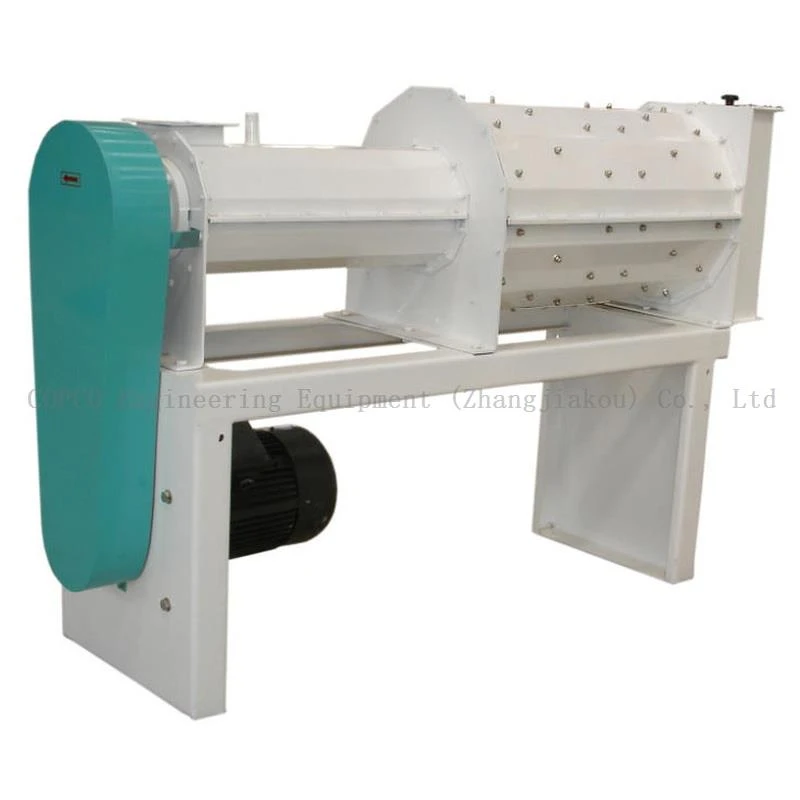
First off, let’s get the basics out of the way. Grain conveying equipment is basically anything that moves grain from Point A to Point B—think from a combine harvester into a grain bin, from a bin to a dryer, or across a processing plant floor. There’s no single price because it ranges from tiny, hand-operated stuff for backyard farms to massive, automated systems that can move grain faster than a combine can harvest it. I’ve seen folks get sticker shock when they realize a top-tier auger isn’t $500, but that’s because they’re comparing it to a wheelbarrow—no shade, we’ve all been there. Let’s go through each main type of equipment, the typical price ranges, what drives those costs up or down, and what you should watch out for before you pull the trigger.
Starting with the most common, go-to piece for small to medium operations: screw augers. If you’re a small family farm with 500 to 2,000 acres, chancesize you’ve used one, or at least seen one. Screw augers are that long, tube-shaped thing with a spiral blade inside that spins to lift grain up—super simple, reliable, no fancy electronics. Now, their price depends on two big things: length and diameter. For a short, 10-foot auger with a 4-inch diameter, that’s your basic transfer auger, right? That’ll run you somewhere between $300 and $800. But if you need something taller, like a 60-foot auger to lift grain from ground level up to a grain bin on a 40-foot tall structure, that’s a 10-inch diameter model, those start at around $2,500 and can go up to $8,000. Wait, why the huge jump? Longer and wider means more metal, a bigger motor, sturdier frame to hold all that weight (grain is heavy—one bushel of corn is like 56 pounds, so a 60-foot auger carrying 10 bushels a minute is pulling some serious load). Also, keep in mind: used augers are a thing, but I always tell folks to be careful here. A beat-up used auger with a bent spiral blade might save you $500 now, but it’ll jam, break, or damage your grain (no one wants corn that’s crunched up) a month later, costing you way more in repairs. New, entry-level augers are worth the investment for most small operations.
Next, something I see a lot of mid-sized farms switch to when they get tired of manually moving augers: chain and belt conveyors. These are a bit more high-tech than augers. Chain and belt conveyors use either a rubber belt or a chain with slats to carry grain along a flat or slightly sloped path—perfect for moving large volumes of grain across a processing plant or between bins in a straight line. The price here is different too, because it’s not just a single piece, it’s a system. For a small, 20-foot belt conveyor that moves 50 bushels an hour, that’s for a small farm or a startup grain dryer operation, you’re looking at $1,500 to $4,000. But if you need a longer system, like a 100-foot conveyor that moves 500 bushels an hour (that’s enough to empty a semi-truck in like 20 minutes), that jumps to $8,000 to $25,000. What drives that cost? The belt material—some are plain rubber, some are coated to keep dust down (super important if you’re in a food processing plant where dust can be a safety hazard), the motor power, and if it’s automated (like with variable speed controls so you can adjust how fast grain moves). Also, if you need to customize it for your space—like turning corners or fitting between existing structures—add 10 to 15% to the cost, no question. I had a customer last year who had a weird L-shaped layout in his processing building, so we had to build a custom chain conveyor that fit exactly, and that added $3,000 to his original quote, but he saved hundreds in moving other equipment to make space, so it worked out.
Now, for the big players: pneumatic grain conveyors. These are the ones that use air pressure—like a super-powered vacuum—to suck grain through long pipes. They’re game-changers for commercial operations or grain terminals because they can move grain over long distances, even vertically or horizontally around obstacles, and they’re totally enclosed, so less grain is lost to dust or spills. But they’re also the priciest piece of common conveying equipment, no doubt. A small, entry-level pneumatic conveyor for a farm that moves 200 bushels an hour will set you back $15,000 to $35,000. That’s way more than an auger, but here’s the upside: it can do the work of three or four augers, and you don’t have to move it manually around your farm. For a mid-sized grain plant moving 1,000 to 2,000 bushels an hour, you’re looking at $40,000 to $100,000. And if you’re a large commercial terminal moving 5,000+ bushels an hour, those custom, high-capacity pneumatic systems can hit $150,000 and up. Why so much? They have massive fans, heavy-duty piping, dust collection systems (OSHA cares about grain dust explosions, so that’s non-negotiable), and advanced controls that let you monitor flow from a phone or computer. I worked with a grain terminal in Iowa last year that upgraded their pneumatic system; they spent $180k, but they cut their grain loss from 2% to 0.3% annually, so they made their money back in less than two years. That’s the thing about the big-ticket stuff—it’s an investment, not a cost.
Wait, I should also mention the smaller, niche equipment that people often overlook. Like grain vacuums—those are the handheld or semi-portable ones for cleaning up spilled grain in bins or on floors. Those are way cheaper, usually $200 to $1,500 depending on how powerful they are. Or bucket elevators, which are like a vertical conveyor with little buckets that lift grain up super efficiently. Bucket elevators are common for grain bins; a 30-foot basic one is $3,000 to $7,000, and higher-capacity ones go up to $20,000. I’ve had customers ask me why they’d pick a bucket elevator over an auger, and it boils down to space—if you don’t have a lot of horizontal room, a bucket elevator is vertical, so it saves space, and it doesn’t crush grain as much as an auger, which is a big deal if you’re selling malting barley or something that needs to stay whole.
Now, let’s talk about what else affects the price besides the type and capacity. Because a $10k auger vs a $10k conveyor isn’t apples to apples. First, new vs used. I touched on this earlier, but it’s worth repeating. Used equipment can be 30 to 50% cheaper than new, but only if it’s in good shape. The problem with used grain conveying equipment is that grain is abrasive—over time, auger blades wear down, conveyor belts get stretched or damaged, pneumatic fan blades get dented. If you’re buying used, always check for those things, and factor in repair costs. Also, used automated or custom systems are hard to find, so most people buy new for those. Second, add-ons and accessories. A basic auger is cheap, but add a motor cover, remote control, dust collection, or a grain flow sensor, and that’s 10 to 20% more. For conveyors, maybe a safety guard to keep people from getting hurt, or a hopper to load grain into, that adds up. Third, brand matters, but not always in the way you think. I know a lot of guys who swear by the big-name brands, and their equipment lasts 20 years, but you can get a quality, reliable piece from a mid-tier brand for 15 to 20% less. The cheap no-name stuff is a trap— I’ve seen augers break after one harvest, which is a disaster during harvest season when you can’t wait for repairs. Fourth, installation and delivery. If you’re buying a big system, delivery can add a few hundred to a few thousand bucks, depending on how far we have to ship it, and installation—especially for custom pneumatic systems—can add another 10% or so, because you need electricians, riggers, people who know how to set that stuff up without messing it up.
Wait, let’s also get real about what most people actually spend. From my experience as a supplier, the average customer is a mid-sized farm or small grain processing operation, and they spend between $5,000 and $20,000 on their conveying system. That covers a mix—maybe a chain conveyor for moving grain to a dryer, and a couple augers for loading and unloading bins. Smaller farms just getting started spend $500 to $2,000 on basic augers or a small grain vacuum. The big commercial operations? They’re spending $50k to $200k on full systems. That’s the range I see day in and day out, no fluff.
Now, what should you do before you buy? Don’t just look at the upfront price. Think about your daily volume, how far you need to move grain, if you need it to be automated, how much space you have, and what grain you’re moving (some grains like sunflower seeds or soybeans are more abrasive than corn, so you need heavier-duty equipment that costs a bit more). If you’re not sure what you need, just reach out to someone who knows—someone like me, who’s worked with hundreds of farms and plants, not a sales guy trying to push the most expensive thing. I’ve had customers come to me thinking they need a $20k conveyor, but they actually only need a $3k auger because they only move 100 bushels a day. It happens all the time, and it saves them a ton of money.
At the end of the day, grain conveying equipment is an investment in keeping your operation running smoothly, saving you time, and not losing grain (which is pure profit lost). You don’t want to buy the cheapest thing that breaks mid-harvest, and you don’t want to overspend on fancy stuff you don’t need. If you’re ready to figure out what the right fit is for your operation, hit me up to chat through your needs, get a custom quote, or even ask any random questions you have about pricing or types of equipment. No pressure, just honest advice from someone who’s in this industry for the long haul.
Commercial Grain Mill References:
- Grain Elevator and Processing Society (GEAPS). (2022). Conveying Equipment Cost Guide for Agricultural Operations.
- U.S. Department of Agriculture (USDA). (2023). Farm Machinery Cost Analysis: Grain Conveying Systems.
- National Grain and Feed Association (NGFA). (2021). Industrial Grain Handling Equipment Price Benchmark Report.
- Institute of Food and Agricultural Sciences (IFAS), University of Florida. (2022). Cost Considerations for Small-Scale Grain Conveying Equipment.
- American Society of Agricultural and Biological Engineers (ASABE). (2023). Standard Guidelines for Conveying Equipment Pricing and Performance.
COFCO Engineering Equipment (Zhangjiakou) Co., Ltd.
As one of the most professional grain conveying equipment manufacturers and suppliers in China, we also support customized service. Please feel free to wholesale advanced grain conveying equipment for sale here from our factory. Quality products and reasonable price are available.
Address: No.4 ZhongLiang Street, high-tech industrial development zone, Zhangjiakou, Hebei, PRC
E-mail: mayihui@cofco.com
WebSite: https://www.ceeflourmill.com/
