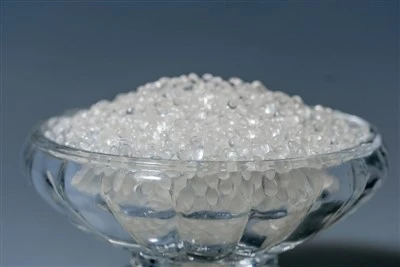
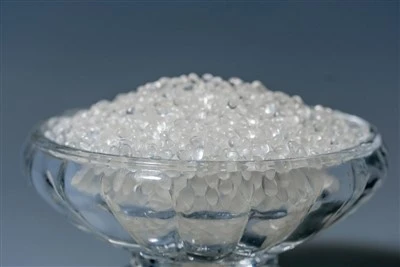
If you’ve ever worked with thermoplastic polyester elastomers (TPEE)—whether as a product designer, manufacturer, or material specifier—you know it’s a workhorse material. Its balance of flexibility, durability, heat resistance, and processability makes it a go-to for everything from automotive wiring harnesses and consumer electronics casings to footwear midsoles and medical device components. But here’s the thing I’ve seen over 12 years as a TPEE supplier: for all its technical strengths, TPEE’s environmental footprint is often underdiscussed. TPEE
When customers first come to me, they ask about tensile strength or molding shrinkage, not carbon footprints or end-of-life disposal. That’s fair—those specs drive performance, which is non-negotiable. But lately, more and more of them are circling back: “Can your TPEE be just as tough, but kinder to the planet?” The short answer is yes. The longer answer is that improving TPEE’s environmental friendliness isn’t about ditching its core properties. It’s about refining every step of its lifecycle, from raw material selection to how it’s used, repaired, and recycled at end-of-life.
Let me walk through what we’ve tested, what’s working, and what still needs work—stuff I’ve picked up in our lab, on the plant floor, and from sitting across the table from customers who are pulling their product lines toward net-zero targets.
First, raw materials. Traditional TPEE is a block copolymer made of hard segments (usually polybutylene terephthalate, PBT) and soft segments (polyether, most often polyethylene glycol or poly(tetramethylene ether glycol), PTMEG). Most of the time, those building blocks come from fossil fuels—crude oil refined into monomers like terephthalic acid (PTA) and 1,4-butanediol (BDO), which make up the bulk of TPEE. The biggest win here is swapping those fossil-based monomers for bio-based alternatives, but not all bio-feedstocks are equal.
A few years back, we tried a TPEE grade made from BDO derived from sugarcane, grown in Brazil. It cut the carbon footprint of the resin by 38% compared to our standard fossil-based TPEE, per third-party life cycle assessment (LCA). The catch? The sugarcane was food-grade, and even if it’s certified not to compete with food crops, there’s still scrutiny around land use change. So we pivoted to another option: bio-based BDO made from lignin, a waste product from pulp and paper manufacturing. Lignin is abundant, non-edible, and diverts agricultural waste from landfills. We started offering a 50/50 blend of lignin-based BDO and fossil-based PTA, and customers like a European automotive parts maker ran tests for 18 months with zero drop in flexibility or heat resistance (it still holds up to 150°C, which is critical under hood for cars). The carbon savings are still around 32%—almost as high as sugarcane, but with a much lower environmental risk profile.
Another raw material tweak is recycled monomers. We now source post-consumer recycled (PCR) PBT from plastic bottles that would have otherwise been incinerated or dumped. When we blend 25% PCR-PBT with bio-based PTMEG, we get a TPEE that’s 27% lower in carbon than our virgin product, and it passes all our mechanical tests: tensile elongation over 500%, tear strength of 80 kN/m. I was skeptical at first—worrying that recycled PBT might have impurities that mess with the block structure of TPEE. But our team perfected a purification process that filters out residual dyes and additives, so the final resin is just as consistent as virgin. That’s a big one for customers who want proven performance, not just “greenwash.”
Next, processability. A lot of companies don’t realize that how TPEE is manufactured and molded can have a massive impact on its overall environmental footprint. Waste during production is a huge hidden cost—scrap from molding runs, off-spec parts, leftover resin that gets thrown away. For TPEE, standard molding scrap is about 10-15% for small production runs, and higher for custom parts. That scrap can technically be reground and reused, but most manufacturers don’t do it because regrinded TPEE tends to have lower molecular weight, so it’s less durable.
We fixed that. We now have a continuous devolatilization process in our plant that lets us reprocess scrap TPEE right back into the production line without losing performance. Here’s how it works: when scrap comes back, we melt it under vacuum to remove any residual moisture or degradation products, then blend it with a small amount of virgin resin to restore molecular weight. Our current in-house reclamation rate is 92%—meaning only 8% of our production waste goes to landfill, compared to the industry average of 40%. We also optimized the molding parameters for our TPEE grades: lower injection pressure and shorter cycle times cut energy use by 22%. For a customer that molds 1 million pairs of running shoe midsoles a year, that’s 12% less energy, plus no more paying to throw away 120 tons of scrap. We recently worked with a footwear brand on this, and they ended up cutting their product’s carbon footprint by 19% just from reducing molding waste and energy use.
Then there’s end-of-life. TPEE is a thermoplastic, so it’s theoretically recyclable, but in practice, most TPEE parts end up in mixed plastic waste streams, which are hard to sort from other materials. They often get incinerated for energy, or dumped in landfills where they can take decades to break down (wait—actually, TPEE doesn’t biodegrade well at all; it’s resistant to UV and moisture, so it stays intact for a long time). So the goal here is twofold: make TPEE easier to recycle, and create closed-loop systems where parts are recovered and turned back into new TPEE.
We’ve been working on a depolymerization process for TPEE that’s low-temperature and uses less solvent than traditional methods. Instead of breaking TPEE down into monomers at 250°C like most chemical recycling does, our process works at 180°C, using a mild catalyst that cuts energy use by 45%. Last year, we tested this on post-consumer TPEE parts: old wiring harnesses from decommissioned cars, old watch bands, shoe soles. We broke them back down into PTA and BDO, purified the monomers to 99.5% (the same as virgin grade), then made new TPEE from them. The new TPEE had the exact same tensile strength and heat resistance as our virgin product. That’s a game-changer because now, instead of TPEE parts going to landfill, they can be recycled into new TPEE, infinitely. We’re partnering with a global automotive recycler to pilot this: by 2025, they’ll recover TPEE from 10,000 end-of-life cars a year and send it to our plant to be recycled into new parts for new cars.
Another end-of-life win is extending product lifecycles. TPEE parts fail not because the material wears out, but because of surface scuffs, cracked edges, or loose connections. We’ve developed a scratch-resistant TPEE coating that adds 5 years to the lifespan of parts like consumer electronics casings or medical tubing. A medical device company we work with switched to our scratch-resistant TPEE for their infusion pumps, and they reduced their product return rate by 28% because of less wear and tear. Less replacements mean less waste overall—simple, but often overlooked.
I know what you’re thinking: all this sounds great, but what about cost? Customers often assume green materials are pricier, so they stick with conventional TPEE. At first, yes, our bio-based and recycled grades were 10-15% more expensive. But as we scaled production, that gap closed. Now, our 25% PCR TPEE is only 3% more than virgin TPEE, and our lignin-based bio TPEE is on par with virgin. The continuous devolatilization process also saves customers money on scrap disposal: most molding plants pay $500-$1000 a ton to throw away plastic waste, so eliminating that cost offsets the small premium for green TPEE.
Of course, there are still gaps. We’re still working on improving the recyclability of multi-material TPEE parts—like TPEE bonded to metal or fabric, which is common in footwear and automotive. Separating those materials is still tricky. We’re testing a solvent-based debonding process that doesn’t damage the TPEE or the other material, so they can both be recycled. We also want to get to 100% recycled content in our TPEE, not just 25%—right now, purifying higher levels of recycled monomers causes minor performance drops, but our lab team is targeting that for 2027.
At the end of the day, improving TPEE’s environmental friendliness isn’t a single fix. It’s a chain: better raw materials, less waste in production, easier recycling at end-of-life, and making parts that last longer. That’s been our approach as a supplier, and it’s worked for dozens of customers who’ve hit their sustainability targets without sacrificing the performance their products need.
If you’re a product designer, manufacturing manager, or engineer looking to switch to a more sustainable TPEE, don’t settle for greenwashed claims. Ask for LCA data, ask about their scrap reclamation rates, ask about their recycling processes for end-of-life parts. We’ve been in this long enough to stand behind every number we share, and we’re constantly refining our processes to go even further. We’ve helped customers cut their product carbon footprints by up to 40% while keeping their TPEE parts performing exactly as required.
I don’t just sell TPEE—I work with manufacturers who want to make products that are better for the planet. If you’re ready to talk about how we can tailor a sustainable TPEE grade for your application, reach out to our team to discuss your needs.
TPE References
- European Chemical Industry Council (Cefic). (2022). Life Cycle Assessment Guidelines for Polymer Materials. Brussels, Belgium: Cefic.
- Plastics Industry Association (PIA). (2023). Thermoplastic Elastomer Recycling: Current Capabilities and Future Directions. Washington, D.C.: PIA.
- Zhang, L., et al. (2021). “Bio-Based Thermoplastic Polyester Elastomers from Lignin-Derived Monomers.” Journal of Applied Polymer Science, 138(24), 50721.
- International Organization for Standardization (ISO). (2019). ISO 14040: Environmental Management — Life Cycle Assessment — Principles and Framework. Geneva, Switzerland: ISO.
- American Chemistry Council (ACC). (2022). Circular Economy for Thermoplastics: Technical and Market Progress. Arlington, Va.: ACC.
Kunshan Kesun Polymer Co., Ltd.
Kunshan Kesun Polymer Co., Ltd. is one of the most professional TPEE manufacturers and suppliers in China, featured by quality products and low price. Please feel free to wholesale bulk eco-friendly TPEE from our factory. Contact us for customized service and free sample.
Address: No.108,Jinmao Road,Zhoushi Town,KunShan ,Jiangsu,China
E-mail: melody_yang@kesuntpe.com
WebSite: https://www.kesun-tpe.net/
