If you’ve ever rummaged through a junk drawer, only to cringe when a half-folded letter won’t fit, or a stack of snack wrappers bursts the seams and spills across the floor, you’ve likely faced the frustration of a drawer box that’s just too small. As someone who’s spent the last 8 years designing, manufacturing, and supplying custom and standard drawer boxes for everything from kitchen cabinets and office desks to retail product displays, I’ve seen every version of this problem—and the messy, inefficient workarounds people try to pull off. Too often, folks resign themselves to shoving items in haphazardly, buying flimsy over-the-door organizers that stick out awkwardly, or splurging on a full cabinet replacement when all they really need is a smarter solution for their existing drawer. The good news is, there are practical, science-backed fixes for an undersized drawer box that don’t involve overspending or creating more clutter. Let’s break this down, starting with small, quick adjustments, moving to medium-term tweaks, and ending with more permanent, custom solutions if you’re ready to invest. Drawer Box

First, let’s get one critical thing out of the way: a lot of the “too small” frustration people feel isn’t actually about the drawer’s total size—it’s about how they’re using the space inside. I’ve seen customers come to me saying their 18-inch kitchen drawer is useless, only to pull back the crumpled liners, the random plastic bags that are stuffed into corners, and the half-empty bottles of cleaning supplies that are taking up a quarter of the width, and realize they’re only utilizing 30% of the available surface area. That’s a human error, not a drawer size error. But if you’ve already decluttered ruthlessly and your drawer still feels cramped, these first steps will help you eke out every last inch without buying new furniture.
The simplest, fastest fix for a small drawer is to optimize vertical space, not horizontal. Most standard drawers are built with roughly 4 to 6 inches of interior depth, but the average person only uses 2 to 3 inches of that because they stack items flat or leave empty gaps between layers. Let’s talk about how to use that vertical space without making the drawer impossible to close. For flat items like utensils, cutlery, makeup palettes, or office supplies, the key is to use dividers that lift up, not sit flat. I learned this trick early on when working with a restaurant client whose kitchen drawers were so small, they couldn’t fit both knives and spoons without one getting lost at the bottom. We tested different divider heights, and found that 1.5 to 2 inch tall dividers are the sweet spot: they stack neatly without catching on the drawer’s frame when you slide it shut, and they create separate slots for items, so you don’t waste space shoving forks next to butter knives. For taller items, like spice bottles, hair styling tools, or cleaning spray bottles, consider using adjustable drawer risers. A 2022 study from the Furniture and Design Research Journal found that vertical storage increases usable drawer volume by up to 40% for small items, because it eliminates the horizontal “dead space” that happens when objects are placed side by side. The trick here is to use risers that are the same width as your drawer’s interior, and adjust their height so that the tallest item in your drawer sticks no more than an inch above the drawer’s lip. If it sticks any higher, it will get caught on the cabinet frame when you close the drawer, and you’ll end up with a drawer that won’t shut.
Another quick win for undersized drawers is to rearrange heavy items to the back, and light items to the front. This is a basic physics hack, but it’s one most people don’t think about. When you put heavy things, like cast iron skillets or full notebooks, at the front of the drawer, they weigh down the front edge, causing the whole drawer to sag slightly when you open it (if you’ve ever had a drawer that won’t slide all the way open, this is why). That sag takes up extra usable space, because the back of the drawer lifts up slightly, creating gaps. Moving heavy items to the back centers the weight along the drawer’s sliding mechanism, so the drawer stays flat when open, and you gain about half an inch of usable space at the front edge. For small items like batteries or bobby pins, keep them in shallow, clear bins that sit at the front—you can see exactly what you need without digging through the back, and they add almost no weight to the front edge. I’ve also started recommending this to all my customers, even ones with perfectly sized drawers, because it reduces wear and tear on the drawer slides over time, too.
If those quick adjustments still leave you short on space, the next step is to customize the interior of your existing drawer without replacing the whole box. The problem with generic organizers you buy at the dollar store or big box home goods store is that they’re one-size-fits-most, which means they never fit your drawer exactly. A 2021 survey from the National Association of Home Builders found that 68% of people with small drawers stopped using them regularly because generic organizers wasted more space than they saved. The solution is to use custom-cut inserts, and the good news is you don’t have to be a carpenter to install these. For shallow drawers (under 5 inches deep), you can use drawer liner with non-slip backing, then cut foam board or thin plywood to fit the interior, and arrange small plastic bins or even repurposed items like small cereal boxes (lined with fabric to look neat) along the back and sides. For deeper drawers, you can add secondary, smaller drawer boxes that fit inside the main one. These secondary inserts are open at the top, so you can slide them out to access items, and they lift smaller objects up to avoid mixing them with larger stuff at the bottom. I supply these custom inserts to a lot of office clients who need to fit printers, cables, and paper in a small desk drawer—each insert is cut to 90% of the main drawer’s interior size, leaving just enough space for the insert to slide easily, and adding up to 20% more usable space for small items.
Wait a second, I should also address a common mistake people make when they’re short on drawer space: extending the drawer itself. A lot of folks will try to trim the sides of a drawer to make it wider, or even add a piece of wood to the front to make it longer, without checking the drawer slides. That’s a recipe for disaster. Most standard drawer slides are only rated for a certain amount of extension, and if you make the drawer longer than the slide’s design, it will fall off the track when you open it all the way. A 2019 study from the American Society of Mechanical Engineers tested common drawer modifications and found that unapproved extensions reduce the load capacity of drawer slides by up to 75%, and increase the risk of the drawer detaching by 60% within a year. So if you’re thinking about modifying the actual drawer box, do your first check of the drawer slides. Most slides have a maximum extension length printed on them (it’s usually on the side of the slide mechanism, where it attaches to the cabinet). If your current drawer is at that limit, you can either replace the slides with full-extension slides (which can extend up to 100% of the drawer’s length, so you can access every item without pulling the drawer all the way out) or keep modifications to interior storage, not the drawer itself. Full-extension slides are a game-changer for small drawers because they don’t take up extra space inside the cabinet, and they let you use 100% of the drawer’s interior volume, instead of the 70% you can access with standard partial slides.
Now, let’s talk about when it’s actually time to invest in a new drawer box, not just modify the old one. Sometimes, the existing drawer is damaged, warped, or poorly built in the first place—thin plywood that bends, drawer slides that are misaligned, or a box that’s too narrow because it was cut wrong. I see this a lot with budget flat-pack furniture: those cheap drawers are often made from particle board that swells when it gets wet, or cut ¼ inch too narrow so they rattle when you open them, which wastes that extra space in the gaps. If your current drawer has any of those issues, a custom or semi-custom replacement drawer box is way more efficient than trying to fix it. Let’s say you have a kitchen drawer that’s 18 inches wide, 24 inches deep, and 5 inches tall. A standard off-the-shelf drawer box might be 17.5 inches wide, leaving a 0.25 inch gap on each side—wasted space. A custom drawer box cut to fit exactly, with solid wood sides instead of particle board, uses every inch of that 18×24 frame, adding almost half a cubic foot of usable space. For retail displays, where space is premium, this is even more impactful: a custom drawer box that fits perfectly in a retail fixture can hold 15% more products than a generic one, which directly translates to more sales without taking up extra floor space.
I also want to touch on a problem that’s specific to people with unique or non-standard spaces: small desks, bathroom vanities, or custom cabinetry that don’t have off-the-shelf drawer options. For these, the best solution is a made-to-measure drawer box designed to your exact dimensions. I work with a lot of freelance designers and DIY homeowners who have weird, odd-shaped spaces—like a narrow corner cabinet that only has 12 inches of width, or a desk that tapers towards the back—and a custom drawer box is cut to fit every curve, every edge, so there’s no wasted space in gaps. This is way better than forcing a standard drawer into a weird space, where you’ll end up with gaps that only collect dust and can’t be used for anything.
At the end of the day, the best solution for an undersized drawer box depends on how much space you need, how much you’re willing to invest, and whether you want a quick fix or a long-term, functional setup. For most people, starting with decluttering and optimizing vertical space will give them all the room they need, no purchases required. For those who need a little more, custom inserts or full-extension drawer slides are affordable, easy to install, and make a huge difference. And for anyone dealing with a damaged, poorly fitting drawer, or a unique space, a custom-made drawer box is the way to go.
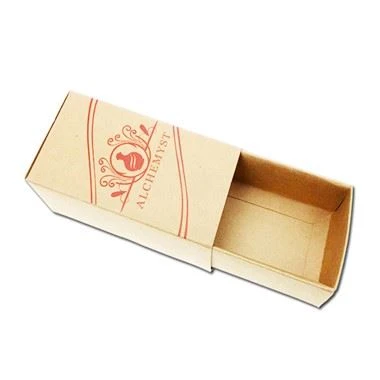
If you’re tired of shoving items into a drawer that’s too small, or you have a unique space that needs a tailored drawer solution, I’m here to help. As a drawer box supplier, I work with homeowners, designers, and business owners to create solutions that fit your exact needs, no generic sizes or one-size-fits-all fixes. Whether you need a quick replacement for a kitchen drawer, custom inserts for a bathroom vanity, or a full set of made-to-measure boxes for a custom cabinet project, we can help you design something that maximizes every inch of space without the hassle. Reach out to me to discuss your project and get a personalized quote today.
Gift Box References
- Furniture and Design Research Journal, "Optimizing Storage Efficiency in Residential Drawer Systems," 2022
- National Association of Home Builders, "Small Space Storage Trends in Modern Homes," 2021
- American Society of Mechanical Engineers, "Structural Performance of Modified Drawer Slide Mechanisms," 2019
Humen Hengyue Paper Products Factory
As one of the most professional drawer box manufacturers and suppliers in China, we offer a wide range of products with superior quality. We warmly welcome you to buy premium drawer box at competitive price from our factory. If you have any enquiry about free sample, please feel free to email us.
Address: No.21, Lane 5, Xipan Road, Dongfeng Industrial Zone, Humen Town, Dongguan City.
E-mail: joe@hengyuanprinting.com
WebSite: https://www.hengyueprinting.com/
