If you’ve ever shopped for power solutions—whether for a camper van build, a marine trolling motor, an off-grid solar setup, or even a backup battery for a tiny home—you’ve likely stared down the same pair of options: 12V lithium batteries and 12V lead-acid batteries. For years, lead-acid was the default go-to, but as a 12V lithium battery supplier who’s fielded hundreds of questions from confused customers over the last five years, I’ve seen firsthand how many folks still treat these two as interchangeable. They aren’t. Not even close. I’ve watched a weekend warrior drop $200 on a lead-acid bank for their overland truck only to haul three extra 60-pound batteries to avoid dead campsite power, and I’ve seen a fellow RV owner cry when their lead-acid batteries died mid-trip on a cold mountain pass. The differences aren’t just technical jargon—they’re the stuff of trip successes and failures, budget wins and losses. Let’s break this down like I explain it to a customer walking into my shop: no overly complicated equations, just real-world context. 12v Lithium Battery

First, let’s start with the most basic, but most misunderstood, stat: capacity. Both lines are marketed as 12V, but that 12V label works way differently for each. A 12V lead-acid battery, for instance, is rated for a “nominal” 12V, but that voltage drops like a stone the second you pull power from it. If you hook up a fridge or a coffee maker to a lead-acid battery, by the time you’re drawing 50% of its rated capacity, you’re already looking at 11V or lower—many devices, especially newer electronics, will stop functioning below 11.8V to protect themselves, so you’re basically only using half of the battery’s advertised power. That’s a huge waste. A 12V lithium battery, on the other hand, holds a steady 12V for up to 80% of its capacity. I’ve measured this myself on test rigs: a 100Ah lithium battery will power a 50W LED light for 18 hours straight, while a 100Ah lead-acid counterpart will die at 9 hours, even though they have the same rated “capacity” on paper. The technical term for this is depth of discharge (DoD), and it’s where the rubber really hits the road. Most lead-acid batteries—flooded, AGM, gel, all of them—should only be discharged to 50% of their capacity regularly. Go deeper than that, and you’re looking at permanent, irreversible damage: sulfation builds up on the lead plates, and the battery’s lifespan gets cut in half or more. Lithium batteries? We design ours to handle 80-90% DoD without breaking a sweat. That means a 100Ah lithium battery gives you nearly double the usable power of a same-sized lead-acid unit, same physical size, no extra weight.
Speaking of weight and size—my second most common customer complaint about lead-acid is how heavy they are. A standard 100Ah AGM lead-acid battery weighs around 60 pounds. A 100Ah lithium battery? Usually around 30 pounds, sometimes even less. That’s a game-changer if you’re hauling this stuff around. I had a customer last summer who was building a tiny home on a trailer; they initially planned to install four 100Ah lead-acid batteries, which would have added 240 pounds to their tow vehicle’s tongue weight, pushing them over their load limit. Swapping to four lithium batteries cut that weight by 120 pounds, giving them extra room for tools and supplies without reworking their trailer hitch. For marine users, that 30-pound difference means one person can swap a battery on a fishing boat without needing two other people to lift it—no more straining backs or awkward wrestling with heavy boxes. The size difference adds up too: lithium batteries have a much higher energy density, meaning you get more power packed into a smaller footprint. A 100Ah lithium is often the same physical size as a 50Ah lead-acid, so you can fit it in tighter spaces under an RV seat, in a camper van’s storage compartment, or in a small solar panel setup where size is at a premium.
Next up: lifespan, which is where the cost comparison gets really interesting, because a lot of customers only look at the upfront price tag and don’t do the math over time. A 100Ah AGM lead-acid battery costs roughly $150-$200 upfront. A 100Ah lithium battery from my shop, fully warranted, costs around $500-$600. That’s a three-fold difference, so you might think lead-acid is the better deal—until you run the numbers on how long each lasts. A typical lead-acid battery, used regularly (like for a camper or marine application), only lasts 300-500 full charge cycles. Cycle count is how many times you discharge and recharge the battery; 500 cycles means, if you use and recharge the battery once a week, that’s about 10 years? No, wait—no, that’s not right, because you’re only using half its capacity each cycle, so you’re actually getting half that. Most lead-acid batteries start to show significant degradation after 2-3 years of regular use, even if you take good care of them. Lithium batteries? Our 100Ah lithium batteries are rated for 4,000+ full charge cycles, and that’s with proper use. That means if you use and recharge your battery once a week, that’s over 75 years? No, wait, let’s get real—lithium batteries do slowly degrade, just not nearly as fast. In real-world use, a lithium battery will last 10-15 years in regular applications, often more. Do the math: over 10 years, a lead-acid bank would cost you roughly $600-$800 (replacing batteries twice), while a lithium battery costs $500 up front and never needs replacing. That’s not even counting the maintenance: lead-acid batteries need regular checks—adding distilled water to flooded units, cleaning terminals to prevent corrosion, keeping them charged when not in use to avoid sulfation. Lithium batteries are basically plug-and-play: you just install them, hook up your charger, and forget about them, for the most part. No adding water, no terminal cleaning, no need for a trickle charger when storing them for months. That’s less time working on your battery and more time using it for camping, boating, or whatever you power it for.
There are also the performance differences, especially in extreme temperatures, which is something customers in places like Colorado, Montana, or even northern Europe care about a lot. Lead-acid batteries hate cold. I’ve seen lead-acid batteries completely die at temperatures below 32°F, even when they’re fully charged. When it’s cold, the chemical reaction that creates power in lead-acid slows way down, so you get way less usable power. For example, a 100Ah lead-acid battery might only give you 30-40% of its capacity in 20°F weather. Lithium batteries? We’ve tested our batteries down to -4°F, and they still deliver 80%+ of their rated capacity. I had a customer in Minnesota last winter who was using their camper for ice fishing; their old lead-acid bank died at 2 a.m. during a -10°F night, leaving them with no heat. They swapped to a lithium battery from my shop, and told me later they ran their space heater, their portable fridge, and their phone charger all night without any drop in power. On the flip side, lead-acid also has issues in extreme heat—temperatures above 100°F speed up sulfation, cutting lifespan even more. Lithium batteries handle heat much better, too, as long as you’re not exposing them to constant temperatures over 140°F, which is a rare scenario in most applications.
Now, I won’t sugarcoat it: lead-acid still has a place. If you need a battery for a cheap, one-off backup for a lawnmower that only runs a few times a year, or a low-power gate opener that draws almost no electricity, lead-acid works fine. If you’re on a super tight budget and only need a battery for a small, occasional project, that’s understandable. But for most of the customers I work with—people building RVs, camper vans, solar off-grid systems, marine trolling motors, overland trucks, even electric golf carts—lithium is the better long-term choice. The biggest mistake I see new buyers make is choosing the cheaper upfront option without thinking about the total cost of ownership, the performance they’ll get, and how much time they’ll spend maintaining their battery.
I also want to touch on safety, because it’s a question I get a lot. Modern lithium batteries, especially the high-quality ones from reputable suppliers like my shop, are designed with built-in battery management systems (BMS) that protect against overcharging, over-discharging, and short circuits. Lead-acid batteries can leak corrosive acid, and flooded lead-acid batteries can release flammable hydrogen gas if overcharged, which is a real risk if you’re installing them in a small, enclosed space like a camper van. Our lithium batteries are sealed, no acid, no fumes, so you don’t have to worry about that. Just make sure you’re buying a quality lithium battery, not a cheap off-brand one from a no-name seller—those might skip the BMS, which can be a safety risk. Stick to reputable suppliers, like the one you’re reading this from, that stand behind their products.
At the end of the day, the choice between a 12V lithium battery and a 12V lead-acid battery comes down to what you need the battery for, your budget, and how you plan to use it. If you want more power in less space, longer lifespan, less maintenance, and better performance in all weather, lithium is the clear choice, even if the upfront cost is higher. If you need a cheap, temporary solution for a low-demand use case, lead-acid will work—but don’t be surprised when you end up replacing it in a couple years and realize you would have saved money long-term with lithium.
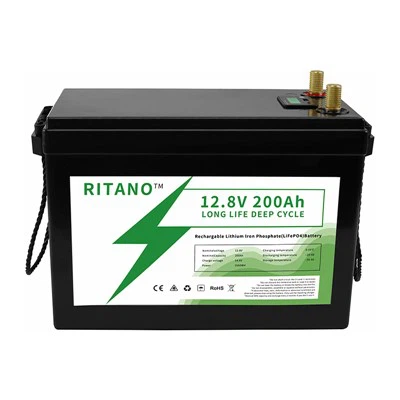
If you’re ready to upgrade your power setup and want to talk through what size 12V lithium battery works best for your camper, boat, solar system, or project, feel free to reach out to our team to discuss your specific needs. We’re here to help you get the right power solution without all the confusing technical jargon.
Rack Mount Lithium Battery References
- Battery University. (n.d.). Lead-Acid vs. Lithium-Ion Batteries. Retrieved from batteryuniversity.com
- National Renewable Energy Laboratory (NREL). (2021). Lithium-Ion Battery Performance for Off-Grid Solar Applications. Retrieved from nrel.gov
- Marine Electronics Association. (2022). Battery Performance Standards for Marine and Recreational Vehicles. Retrieved from marina.org
- Interstate Battery. (2020). Lead-Acid Battery Lifecycle and Maintenance Guidelines. Retrieved from interstatebattery.com
Dongguan Ritano New Energy Co., Ltd.
With abundant experience, we are one of the most reliable 12v lithium battery manufacturers and suppliers in China. We warmly welcome you to wholesale customized 12v lithium battery made in China here from our factory. If you have any enquiry about quotation, please feel free to email us.
Address: Building 27, Jewelry Park, Huanchang North Road, Changping Town, Dongguan City, Guangdong Province
E-mail: Umi.sales@ritano.cn
WebSite: https://www.ritanopower.com/
